How to Reduce Material Waste in Automated Foam Gasket Dispensing with WINMAN
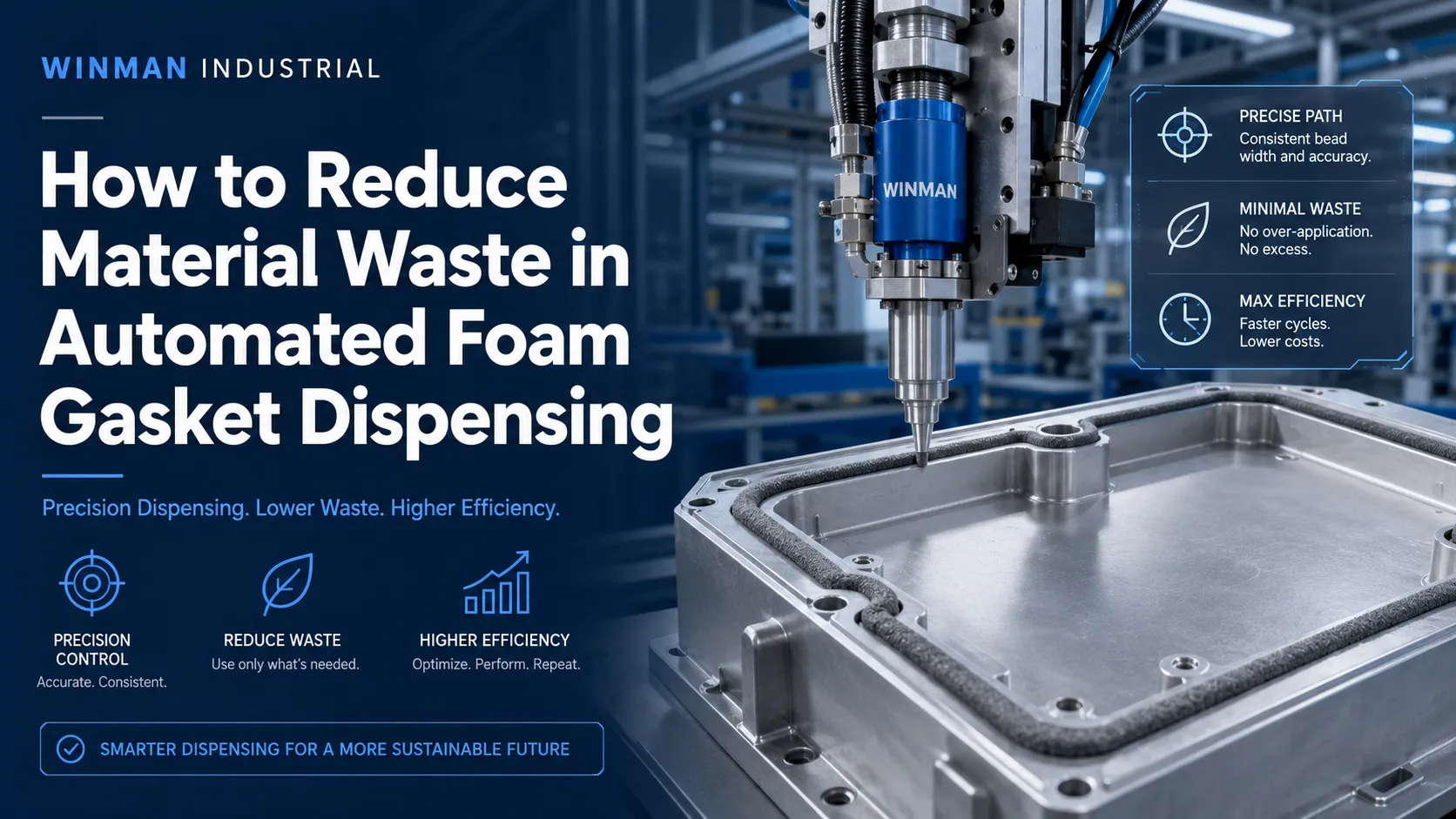
How to Reduce Material Waste in Automated Foam Gasket Dispensing
Practical guidance for FIPFG production lines using PU foam gasket or silicone sealing systems, with a focus on improving consistency, reducing scrap, and lowering overall material cost.
Why material waste happens in automated dispensing
In automated foam gasket dispensing, material waste often comes from small process deviations that gradually add up during daily production. For manufacturers working with two-component PU or silicone materials, even a slight mismatch in ratio, pressure, speed, or path programming can lead to over-application, unstable bead shape, and unnecessary scrap.
Common symptoms include too much material on each part, buildup at the start or end of the bead, inconsistent gasket width and height, excessive purge during cleaning, extra waste during setup, and rejected parts caused by poor mixing. These issues affect not only material utilization, but also cycle time, first-pass yield, and delivery stability.
Common causes of excess material consumption
- A/B component mixing ratio is not accurate enough
- Dispensing output is set higher than required
- Dispensing speed does not match flow rate
- Path design includes repeated or unnecessary bead sections
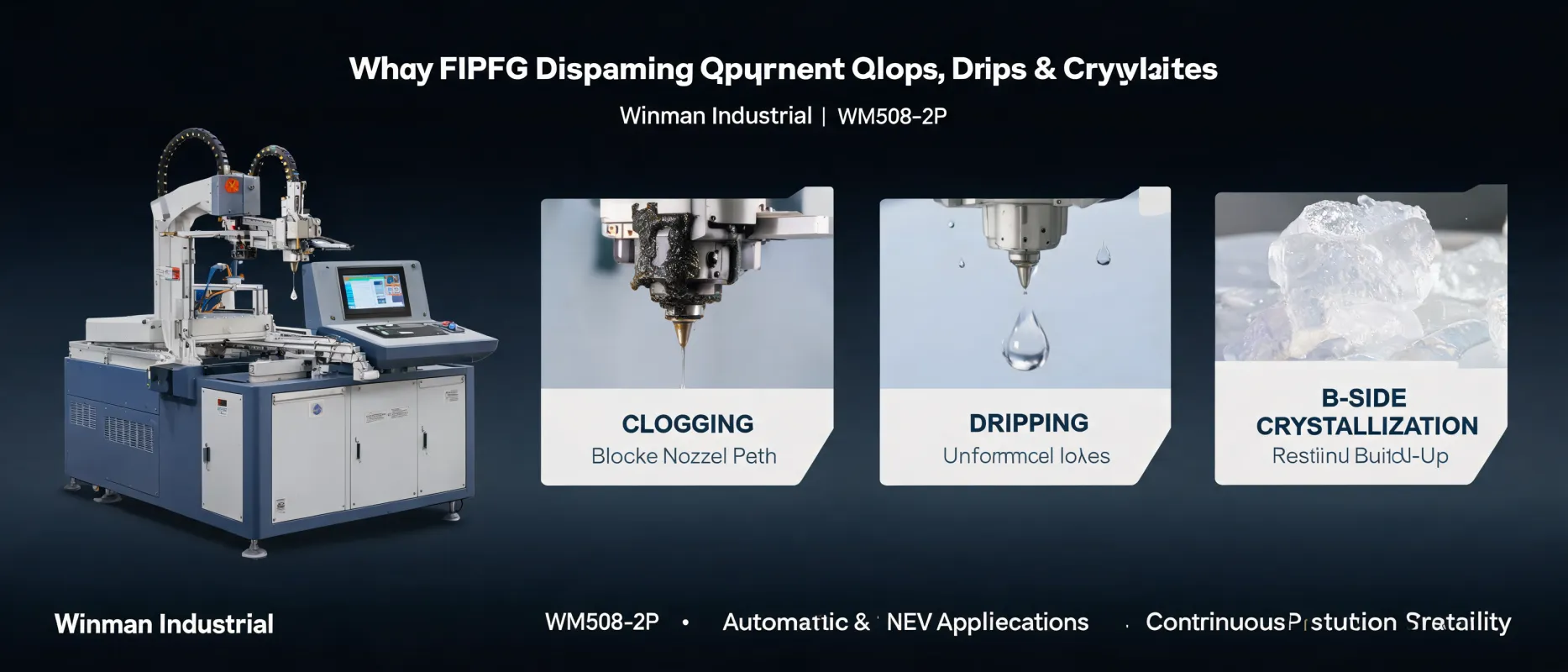
- Nozzle wear, clogging, or poor atomization affects bead quality
- Material temperature and viscosity fluctuate during production
- Frequent disassembly, purging, or manual cleaning increases waste
- Product changeovers require repeated trial runs and re-adjustment
What manufacturers usually want to improve
- Lower material cost per part
- Stable gasket width, height, and profile
- Fewer rejected parts during batch production
- Shorter startup and changeover time
- Less purge waste and cleaner machine operation
- More predictable performance across shifts and production lines
Effective ways to reduce waste in FIPFG dispensing
The most effective approach is to treat material waste as a process control issue, not only a material issue. By aligning equipment settings, path logic, and maintenance routines, manufacturers can significantly improve utilization without sacrificing sealing quality.
Production management practices that support lower scrap rates
- Confirm the first article before moving into full production
- Record key material parameters for each product model
- Monitor material consumption per unit to identify abnormal changes
- Adjust settings promptly when bead size, shape, or curing performance changes
- Schedule preventive maintenance for metering pumps, supply systems, and dispensing heads
- Track changeover performance to reduce trial-and-error waste in multi-product lines
How WINMAN supports better material utilization
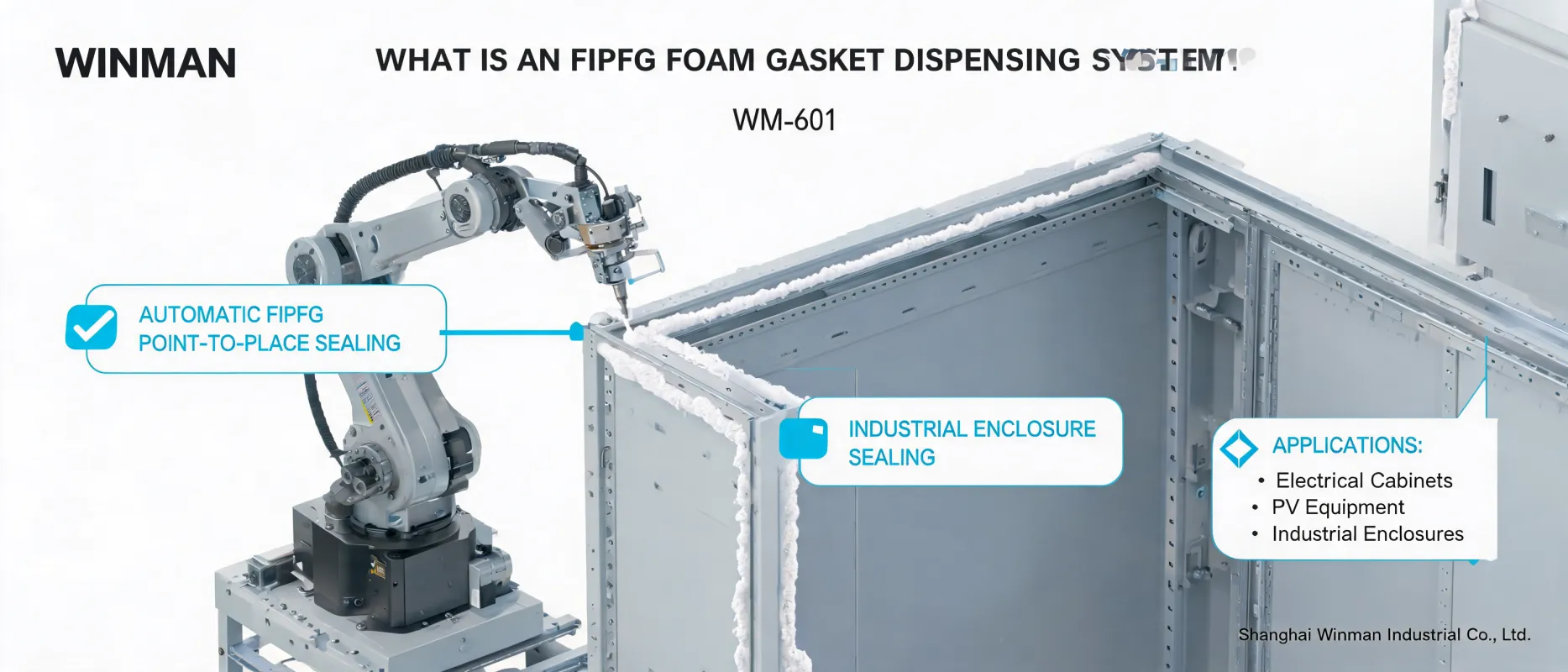
As a FIPFG dispensing and sealing system manufacturer, Shanghai Winman Industrial Co., Ltd. focuses on stable process control for industrial gasket production. WINMAN systems are designed to help manufacturers improve consistency, reduce waste, and support repeatable output across different product types.
- Stable metering and mixing control
- Adjustable dispensing parameters for different parts
- CAD-based path programming for precise bead routing
- Recipe storage for multiple product models
- Automatic cleaning functions to reduce purge loss
- Material and process testing support during setup and optimization
Typical application scenarios
- Small distribution boxes and electrical enclosures
- LED housings and lighting components
- Automotive battery and energy storage parts
- Photovoltaic equipment sealing applications
- Industrial cabinets requiring reliable IP-level sealing
WINMAN WM-508 is developed for practical industrial dispensing needs where uniform bead quality and controlled material usage are essential.
How to evaluate whether waste reduction is working
A good optimization program should be measured with clear production data. Instead of relying on general impressions, track the indicators below before and after process improvement:
- Material consumption per finished part
- Bead width and height consistency
- Scrap rate and rework rate
- Purge consumption during cleaning
- Product changeover time
- Continuous production stability across shifts
When these indicators improve together, the line is usually moving toward lower cost, higher yield, and more predictable sealing quality.
Need a more efficient foam gasket dispensing process?
If you are working on PU foam gasket dispensing, silicone sealing, or FIPFG process optimization, WINMAN can help you evaluate material usage, improve dispensing consistency, and build a more stable production routine for your application.
FAQ
What causes excessive material consumption in FIPFG dispensing?
It is usually caused by inaccurate mixing ratios, excessive output settings, unstable material viscosity, poor path programming, or nozzle and mixing head issues.
How can dispensing volume be controlled more accurately?
By matching flow rate, motion speed, pressure, and mixing parameters to the actual gasket size and sealing requirement of each product.
Does automatic cleaning help reduce material waste?
Yes. Automatic cleaning can reduce clogging risk, improve startup stability, and lower purge-related scrap during operation and shutdown.
How should dispensing speed and flow rate be matched?
They should be calibrated together so the bead remains uniform in width and height while avoiding over-application at corners, starts, and stops.
Can different product parameters be stored for future use?
Yes. Recipe storage makes it easier to save process settings for different products, shorten changeover time, and reduce trial waste in multi-model production.


Hot Products


Popular articles