Industrial Sealing Dispensing Misconceptions: Why More Material Is Not Always the Solution
Shanghai Winman Industrial Co., Ltd
2026-07-25
Misconception Correction
WINMAN explains why increasing dispensing volume alone cannot solve every industrial sealing issue, covering sealant control, dispensing accuracy, surface conditions, equipment precision, and process evaluation.
Reliable industrial sealing is not determined by material volume alone.
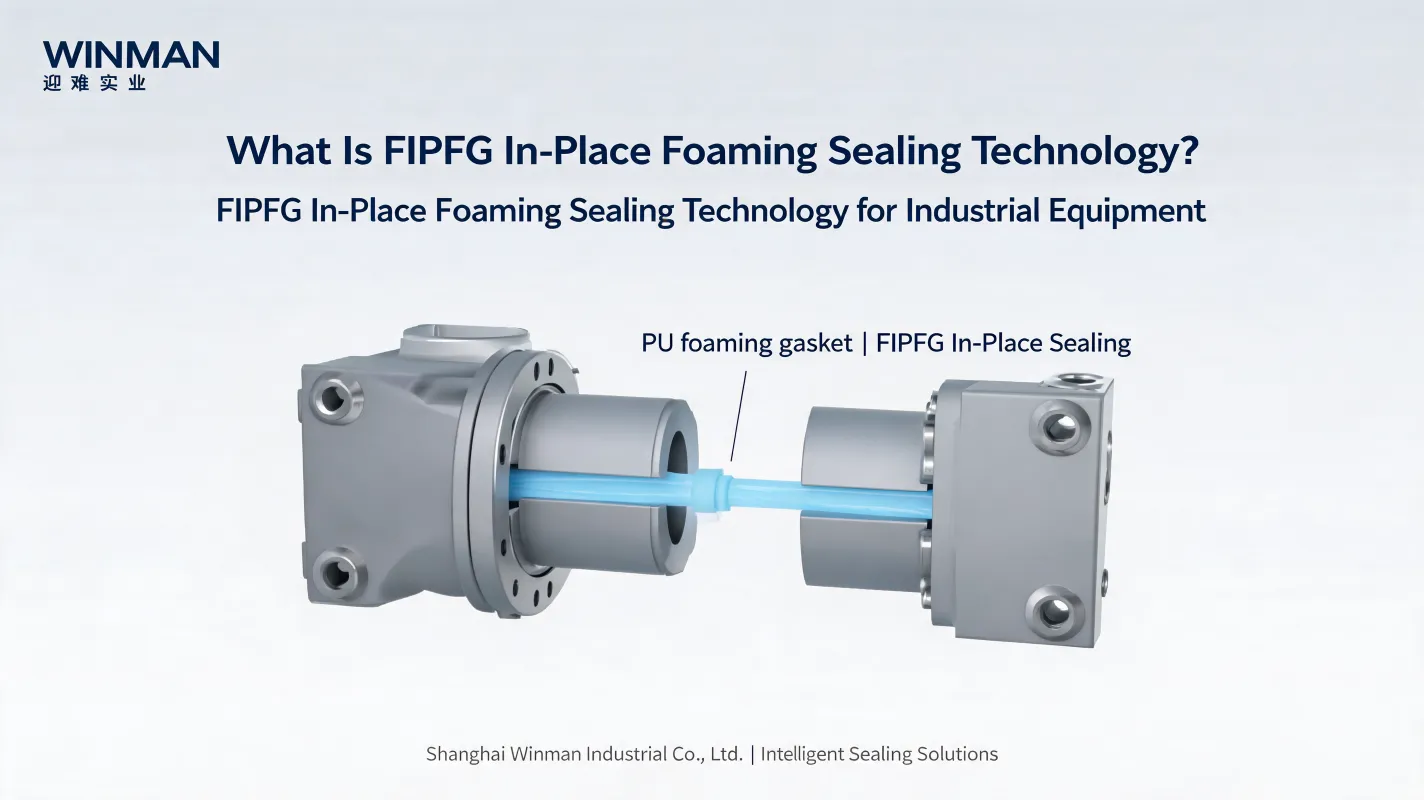
In FIPFG and other automated dispensing processes, adding more sealant may appear to be a simple response to leakage, incomplete coverage, or insufficient compression. However, a larger dispensing volume does not automatically correct the cause of a sealing failure. WINMAN evaluates the dispensing process as an integrated system involving seal width, material behavior, surface conditions, equipment precision, and process parameters.
Why increasing dispensing volume can be misleading
More material does not always mean better coverage
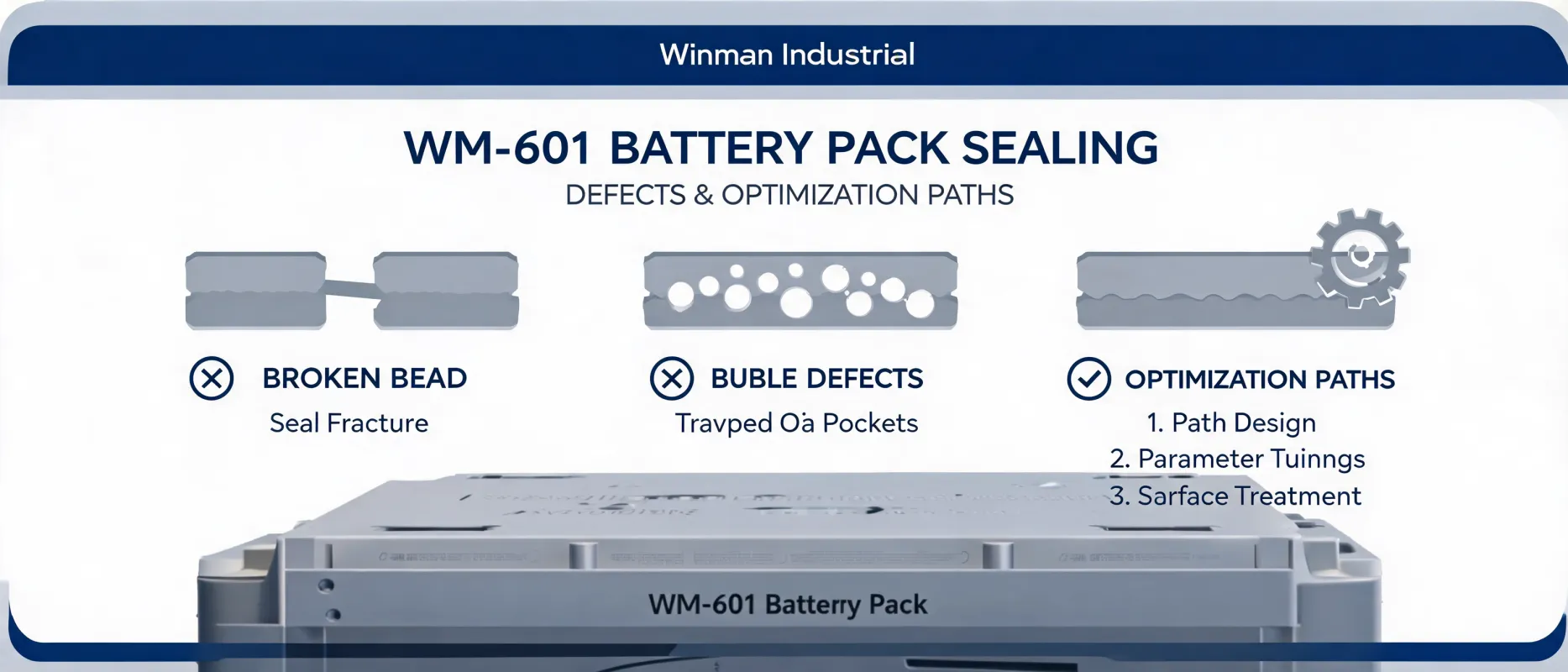
A thicker bead may increase material use without correcting an interrupted path, an unsuitable bead profile, or insufficient contact with the sealing surface. Coverage must be assessed along the complete dispensing route.
Excess volume can create new process problems
An oversized bead can affect compression, curing or foaming behavior, component assembly, and material consumption. The suitable amount depends on the joint design and the characteristics of the sealant.
The visible symptom may not be the root cause
Leakage or an incomplete seal may originate from surface contamination, dimensional variation, incorrect process parameters, or dispensing instability rather than insufficient volume.
Five factors that influence sealing performance
A reliable industrial sealing process requires the main variables to be considered together. The following factors provide a practical framework for identifying the source of a sealing issue.
| Factor |
What should be evaluated |
Why it matters |
| Seal width and profile |
Bead continuity, width, height, corner transitions, and position |
The joint must receive consistent coverage at the locations that require sealing. |
| Sealant properties |
Viscosity, mixing behavior, reaction or curing characteristics, and material compatibility |
Material behavior affects flow stability, adhesion, and the final sealing structure. |
| Workpiece surface |
Cleanliness, flatness, surface energy, dimensional variation, and joint condition |
A stable dispensing process cannot compensate for unsuitable or inconsistent surfaces in every situation. |
| Equipment precision |
Metering accuracy, dispensing stability, motion control, nozzle condition, and repeatability |
Controlled output and accurate positioning help maintain a consistent bead from part to part. |
| Process parameters |
Dispensing speed, flow rate, temperature where applicable, path strategy, and curing or foaming conditions |
Parameters determine how the material is deposited and how it forms the finished seal. |
Common misconceptions in automated sealing
- “The seal is leaking, so the dispensing volume must be too low.”
Leakage should first be connected to the actual failure location, bead continuity, surface condition, assembly compression, and material behavior.
- “A wider bead can compensate for inaccurate dispensing.”
A wider bead may conceal a positioning problem temporarily, but it does not replace accurate motion control and stable material output.
- “The same volume can be used for every workpiece.”
Different joint geometries, materials, tolerances, and sealing requirements may require different process settings.
- “A successful trial proves that the process is already stable.”
Process evaluation should consider repeatability across representative workpieces, not only the result of a single sample.
A practical approach to diagnosing sealing failures
- Locate the failure precisely. Determine whether the issue is related to a gap, an interrupted bead, incorrect positioning, insufficient adhesion, deformation, or assembly conditions.
- Review the joint and workpiece. Check the sealing path, surface quality, dimensional consistency, and the required compression or contact condition.
- Check the sealant and delivery system. Confirm that the selected material, mixing or metering behavior, nozzle condition, and material supply are suitable for the process.
- Verify dispensing accuracy. Compare the programmed path and flow settings with the actual bead position, continuity, and profile.
- Adjust the process systematically. Change one relevant parameter at a time where possible, then evaluate repeatability rather than relying only on visual inspection of one part.
Where controlled dispensing is especially important
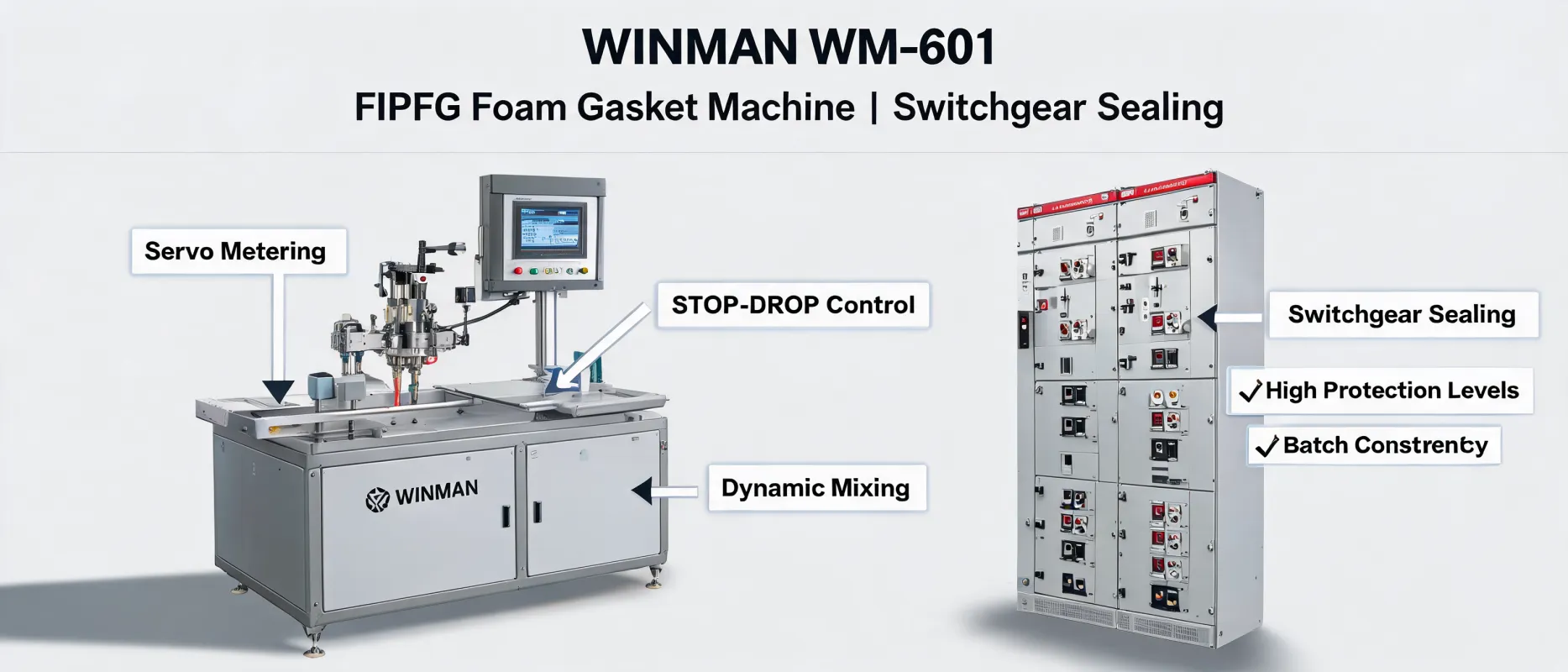
The relationship between material volume, bead geometry, surface condition, and equipment precision is relevant wherever sealing consistency affects product assembly and protection. WINMAN provides FIPFG dispensing and sealing equipment solutions for industrial applications including:
Automotive and lithium battery manufacturing
Energy storage systems
Electrical control cabinets
Photovoltaic equipment
Evaluate the complete process, not only the volume
A dependable sealing process is built through the coordinated control of material, workpiece, equipment, and operating parameters. Increasing dispensing volume may be appropriate in some specific conditions, but it should be a verified process adjustment rather than a universal solution.
With technical experience in PU foamed gaskets and two-component silicone sealing, Shanghai Winman Industrial Co., Ltd. supports customers in assessing FIPFG dispensing and sealing requirements. The objective is to establish a controlled, repeatable process that matches the workpiece design and application conditions instead of relying on excess material alone.