FIPFG Working Principle: From AB Mixing to Foam Seal Formation

FIPFG Working Principle: From AB Mixing to Foam Seal Formation
FIPFG (Foam-in-Place Formed Gasket) is a sealing process in which two liquid components are mixed, dispensed along a programmed path, and cured directly on the part to create a continuous foam seal. In Winman Industrial’s engineering approach, the process is designed as a complete sealing chain rather than a single dispensing action: material preparation, AB component mixing, path control, foaming, and curing work together to deliver stable results for small enclosures and micro devices.
How the FIPFG process works
1. AB component mixing
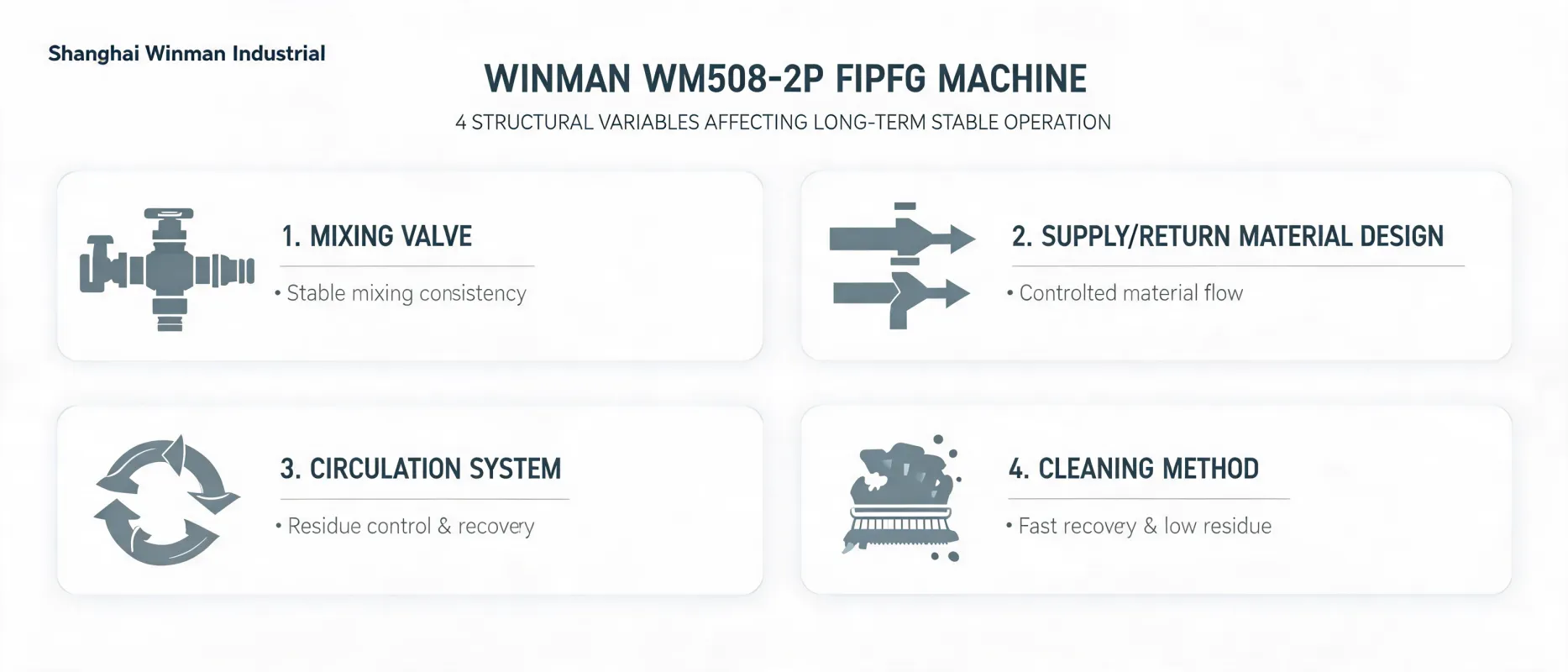
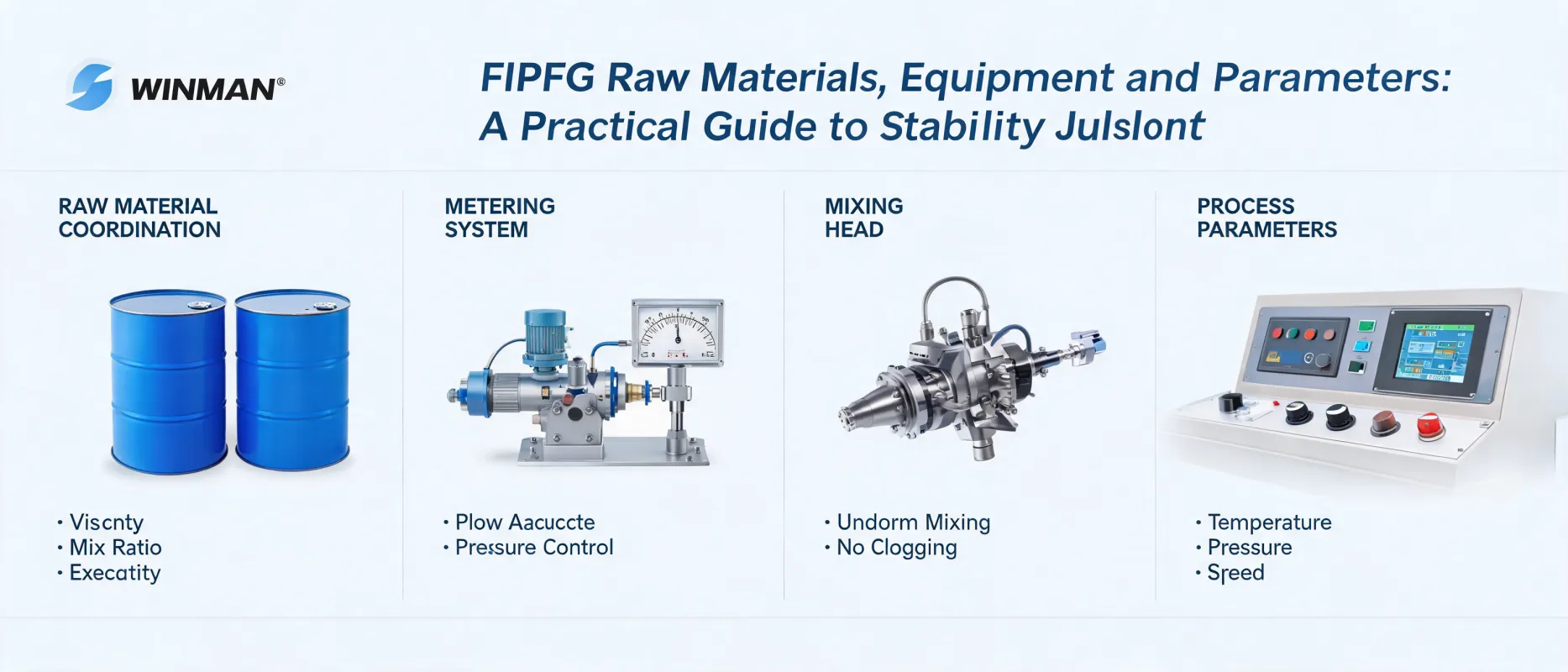
The process begins with controlled mixing of the A and B components. Stable mixing is essential because it directly affects foam formation, bead continuity, and the final sealing quality.
2. Path control
The dispensing head follows a defined route on the enclosure surface. Accurate path control helps the gasket stay aligned with the sealing groove or frame edge.
3. Foam expansion
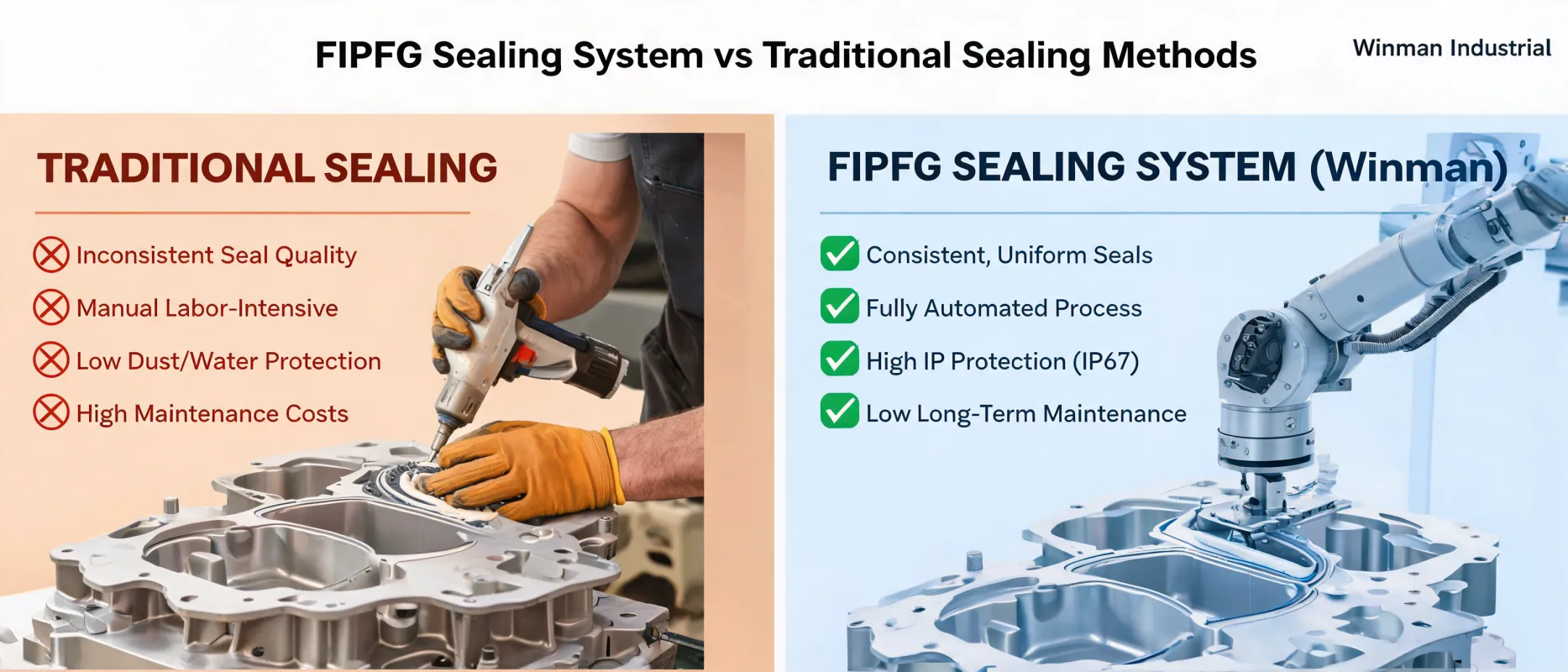
After dispensing, the material expands and begins to form a soft, continuous gasket. This step creates the physical barrier needed for dust and moisture protection.
4. Curing and seal formation
The foam cures in place and becomes a formed gasket that matches the part geometry. The result is a continuous seal that supports consistent enclosure protection.
Why the process chain matters
A reliable FIPFG system depends on the coordination of multiple process elements. If mixing, motion control, dispensing accuracy, or curing conditions are unstable, the final gasket can lose uniformity. Winman Industrial focuses on the complete process chain so that the resulting seal supports repeatable industrial production.
WINMAN WM403-1 as a compact application example
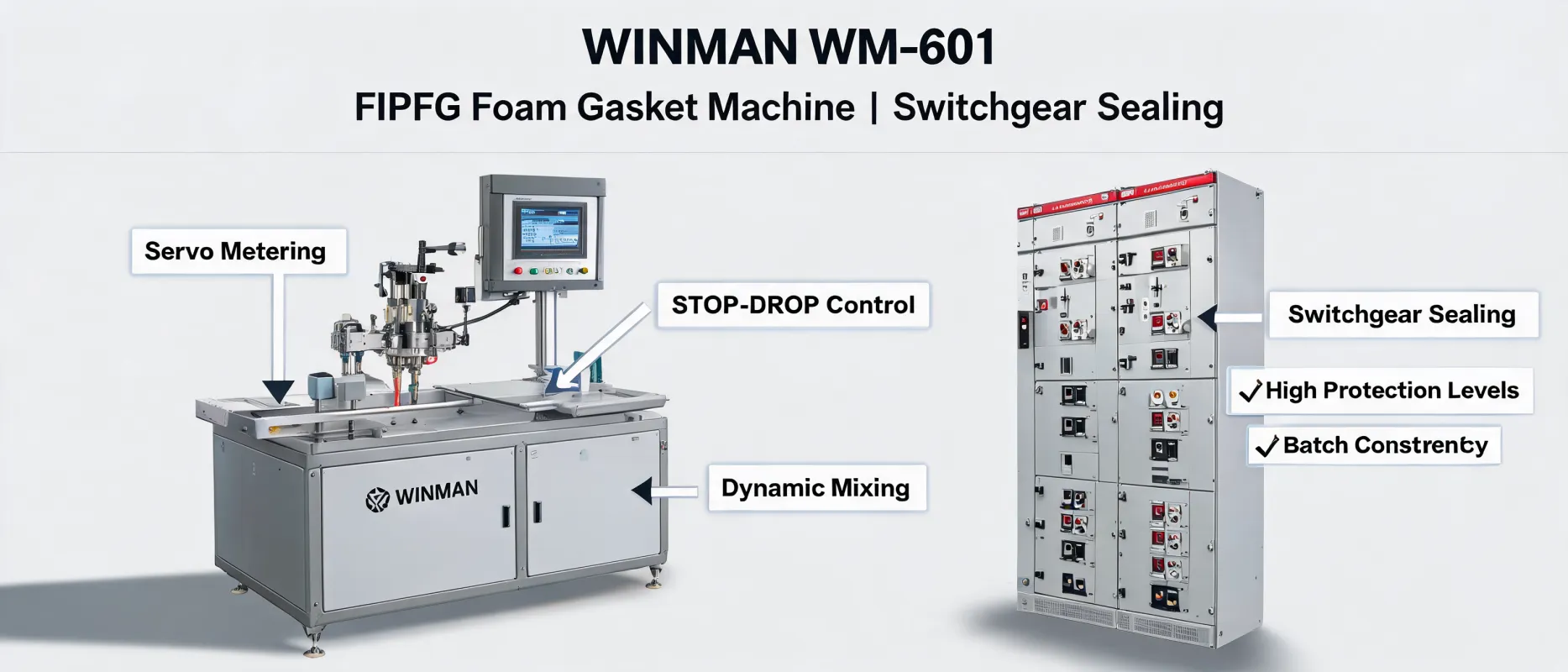
The WINMAN WM403-1 is a compact FIPFG machine developed by Shanghai Winman Industrial Co., Ltd. It is designed for small instrument enclosures, small appliances, and microelectronic components where space is limited and sealing consistency is critical.
- High-precision dispensing control for consistent gasket formation
- Compact design suitable for smaller production footprints
- Support for path storage and remote maintenance
- OEM/ODM options such as voltage configuration, dual-station design, and fixture adaptation
Key advantages of a compact FIPFG system
Precision-focused sealing
A stable dispensing system helps support uniform foam bead geometry and reliable enclosure sealing.
Lower operational burden
The compact platform is designed for practical production use, with features that support maintenance efficiency and production continuity.
Flexible integration
Infinite path storage and remote operation support make it easier to adapt the machine to different sealing routes and production needs.
Where this FIPFG principle is commonly applied
The FIPFG working principle is widely used in enclosure sealing scenarios that require continuous gasket formation and consistent protection performance. For compact systems like WM403-1, the method is especially relevant for:
- Small instrument housings
- Home appliance covers and control parts
- Microelectronic component enclosures
- Other compact industrial parts that need a formed foam seal
“In FIPFG, the seal is not installed as a separate part. It is formed directly on the enclosure through controlled mixing, path execution, foaming, and curing.”



Hot Products
Popular articles