Why FIPFG Sealing Develops Uneven Foaming, Collapse or Broken Lines
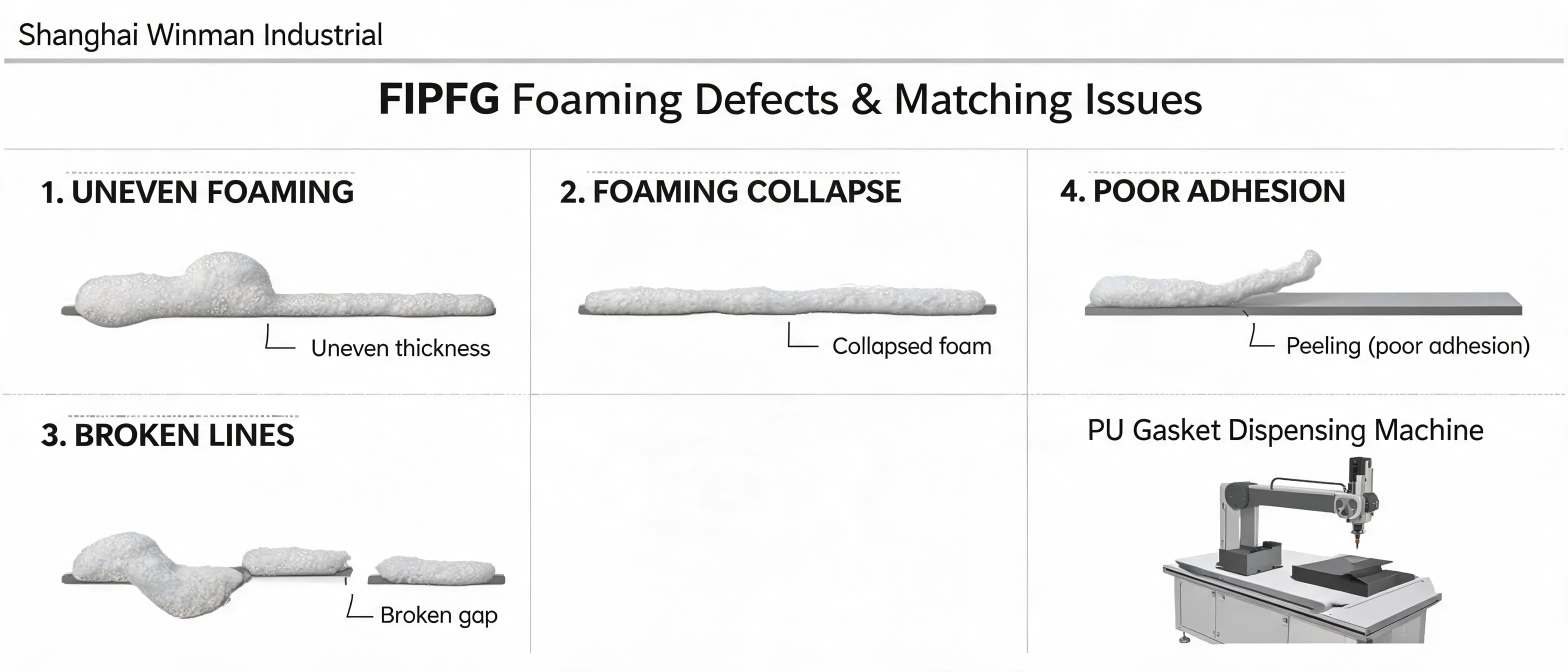
FIPFG PROCESS DIAGNOSTIC GUIDE
Understanding Uneven Foaming, Collapse and Broken Sealing Lines
FIPFG sealing abnormalities can affect both appearance and protection performance. Uneven foaming, local collapse, intermittent sealing lines and poor adhesion may be related to the polyurethane material, metering accuracy, mixing quality or process parameters. Shanghai Winman Industrial provides this guide to help manufacturers identify the direction of a problem before selecting or optimizing a PU gasket dispensing machine.
What FIPFG sealing abnormalities usually indicate
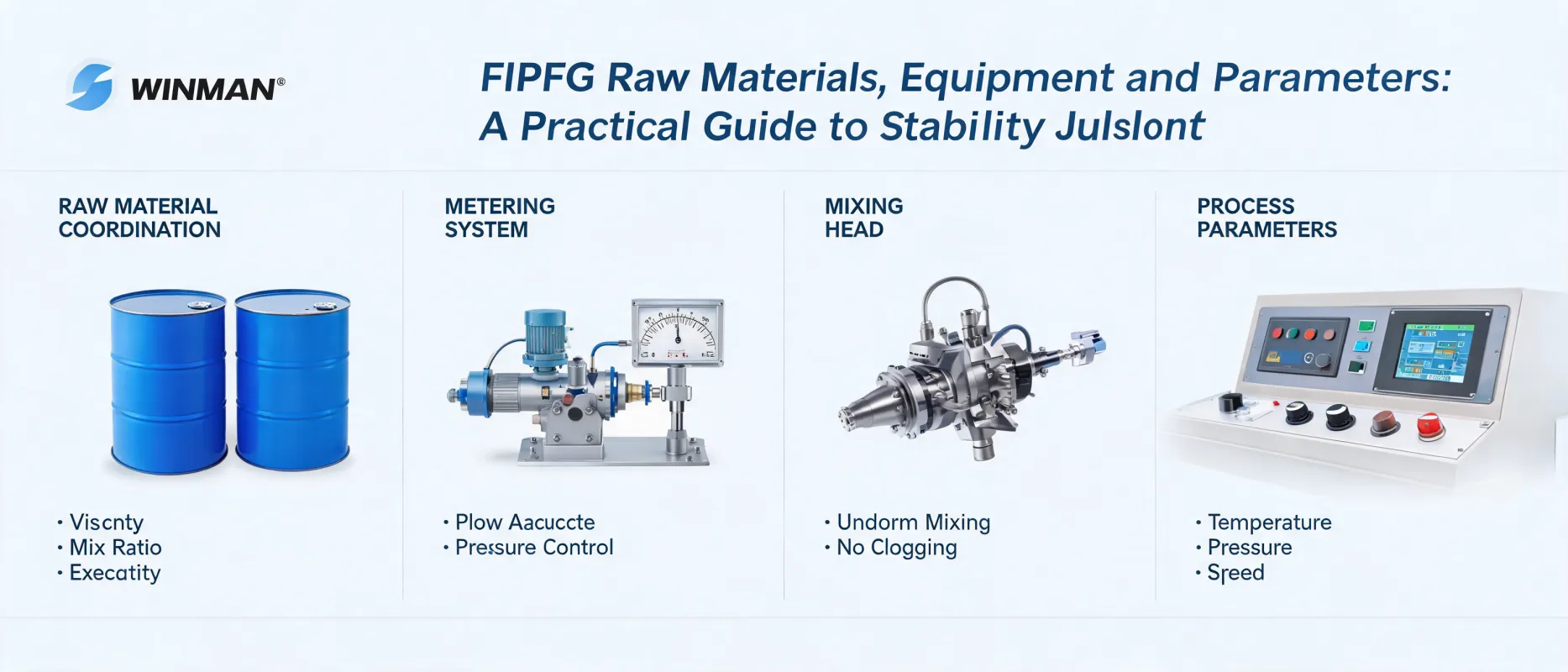
FIPFG, or Formed-In-Place Foam Gasket, creates a foamed polyurethane sealing line directly on the workpiece. The final gasket profile depends on the coordinated performance of the material system, the dispensing equipment and the application process. A visible defect should therefore be evaluated as a system issue rather than attributed to one component immediately.
Material-related factors
Reaction characteristics, storage condition, viscosity and component compatibility can influence foaming, curing and adhesion.
Equipment-related factors
Metering stability, AB component ratio, mixing quality, dispensing accuracy and material supply can affect line continuity.
Process-related factors
Application speed, dispensing path, workpiece condition and operating parameters may change the shape and bonding result.
Common FIPFG defects and diagnostic directions
| Observed condition | Possible influence | What to review first |
|---|---|---|
| Uneven foaming or an inconsistent gasket profile | Material reaction, unstable flow, mixing quality or dispensing movement | Material condition, component delivery stability, mixing result and application parameters |
| Foaming collapse or locally reduced height | Reaction behavior, component ratio, curing condition or insufficient process stability | AB ratio control, material storage and curing-related parameters |
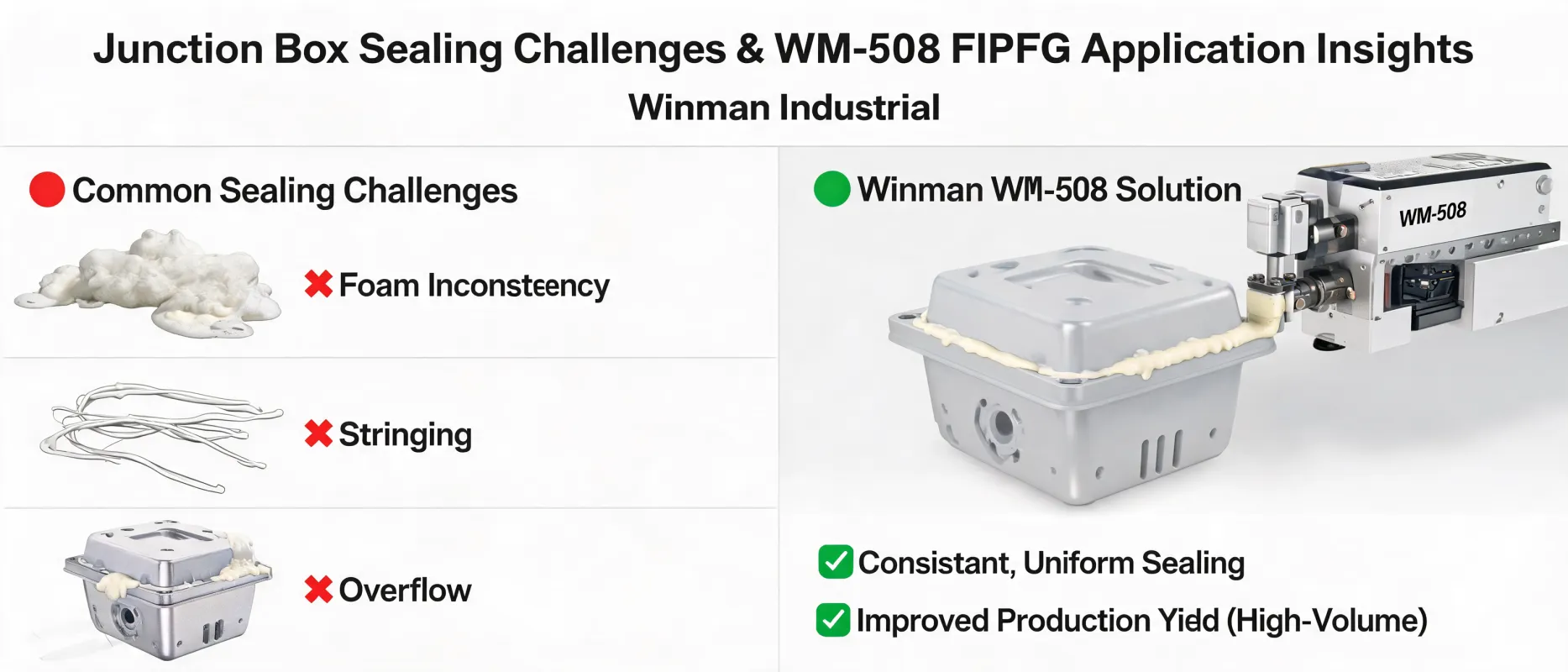
| Broken, intermittent or discontinuous sealing lines | Unstable material supply, dispensing interruption, air involvement or path movement | Automatic feeding, metering continuity, mixing condition and dispensing route |
| Poor adhesion to the workpiece | Substrate condition, material compatibility or process preparation | Surface cleanliness, workpiece material, adhesive compatibility and curing result |
How to distinguish material, equipment and process problems
- Confirm the material condition. Review the polyurethane material specification, storage condition, viscosity and reaction behavior. If the material itself is unstable or unsuitable for the application, equipment adjustments may not fully resolve the defect.
- Check the AB component relationship. FIPFG systems rely on controlled delivery of the two components. A deviation in the mixing ratio can influence foaming, curing, gasket formation and adhesion.
- Evaluate metering and mixing stability. Inconsistent output, insufficient mixing or irregular material supply may appear as uneven foam or broken sealing lines.
- Review the dispensing path and operating parameters. The workpiece route, application speed and process settings should match the required gasket geometry and production conditions.
- Inspect the workpiece surface and final cure. Surface contamination, unsuitable substrate conditions or incomplete curing can reduce adhesion even when the dispensing line appears visually continuous.
Why metering and mixing accuracy matter
A PU gasket dispensing system must maintain a stable relationship between material supply, metering and mixing. When the AB component ratio changes or the material flow becomes inconsistent, the sealing line may show differences in height, density, continuity or curing behavior. These variations are particularly important for products that require reliable protection against water and dust.
For this reason, the equipment should be assessed not only by dispensing speed, but also by its ability to maintain repeatable output, controlled mixing and a stable application path. These factors support a more consistent FIPFG gasket and make subsequent process troubleshooting more structured.
Application considerations for high-protection enclosures
Charging piles, outdoor LED enclosures, electrical control cabinets and distribution boxes often require a continuous sealing line around openings, covers or housings. In these applications, a defect may create a local weak point even when most of the gasket appears acceptable.
Considering a PU gasket dispensing machine?
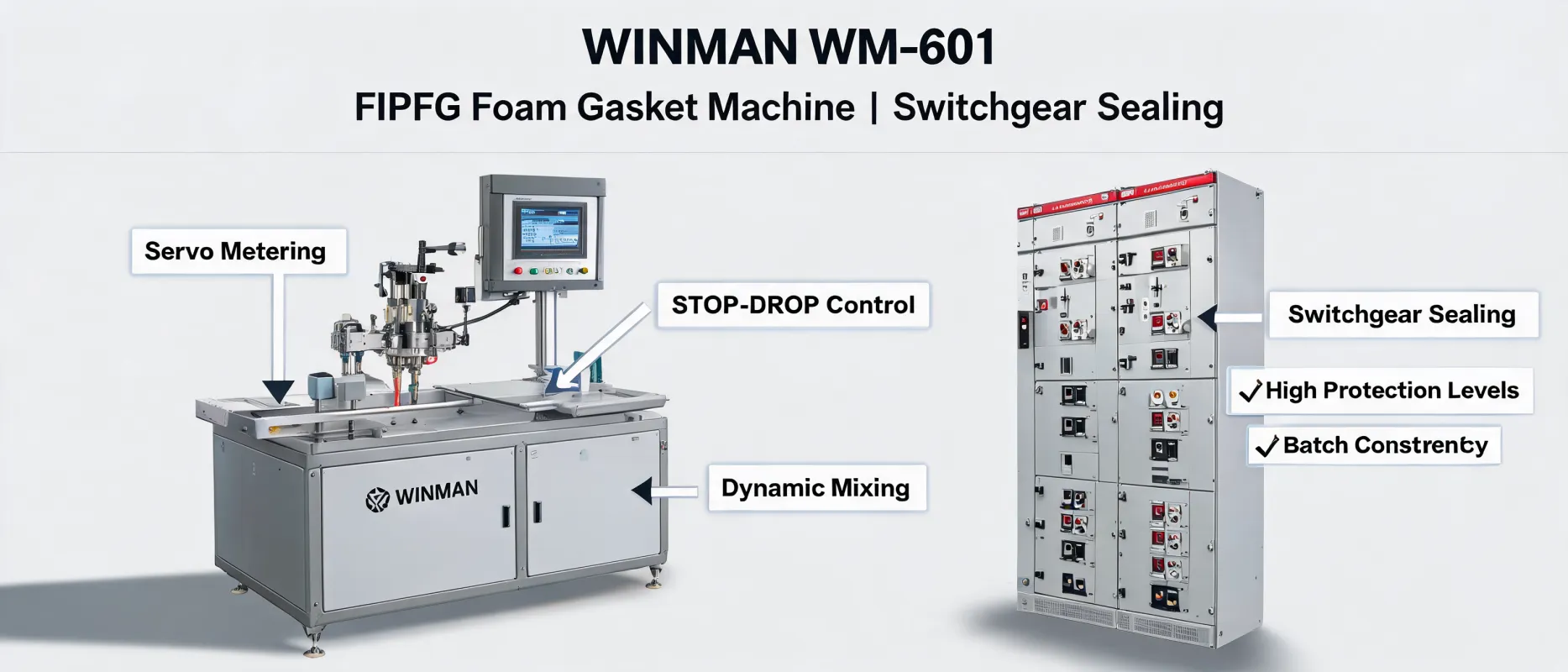
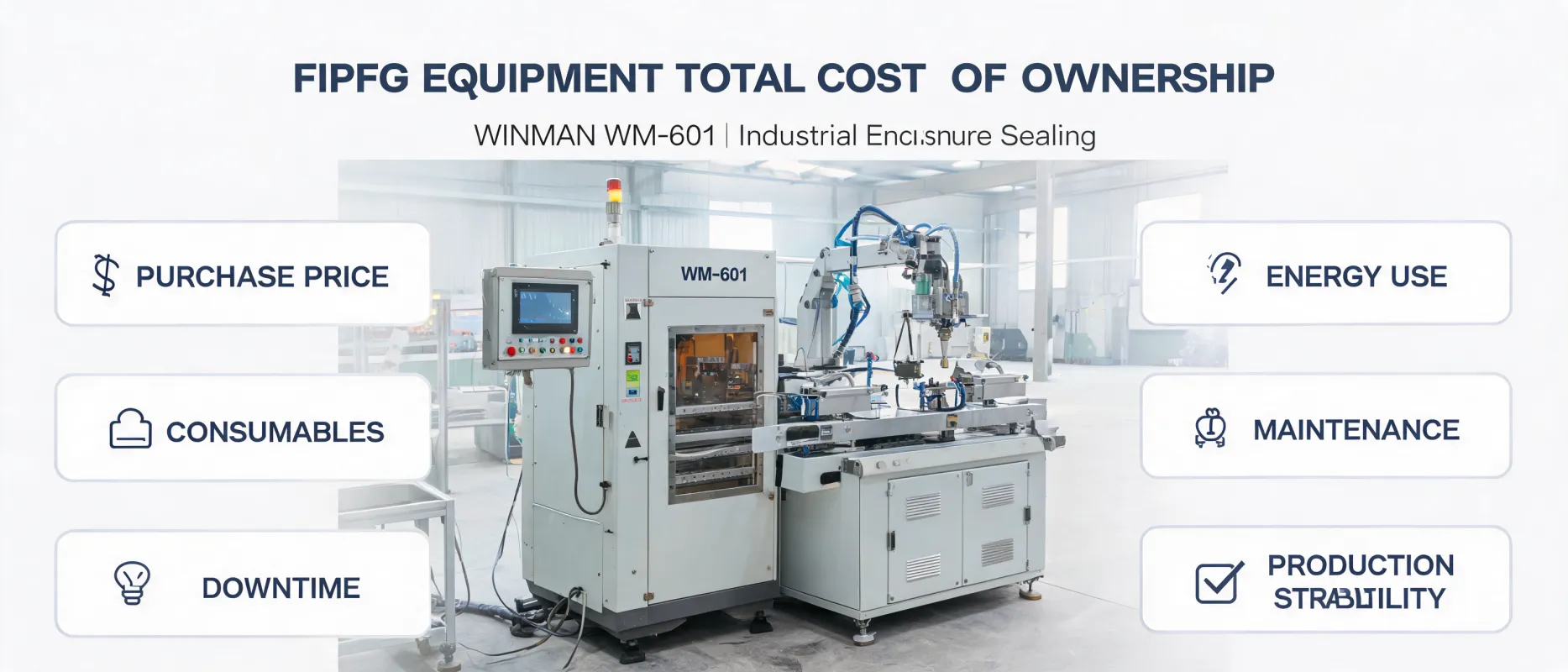
The WINMAN WM-601 is an automatic PU gasket dispensing machine developed by Shanghai Winman Industrial for applications such as charging piles, outdoor LED control cabinets and distribution boxes. Based on German FIPFG technology, it is designed for controlled polyurethane foam sealing and high-protection enclosure applications.
- Dispensing accuracy of up to ±0.05 mm
- AB component ratio control within ±1%
- Automatic feeding support for continuous operation
- Rated energy consumption of 3.5 kW, stated as approximately 50% lower than traditional comparable models
- Key components sourced from Germany and designed for long-term industrial use
- ISO9001 and CE compliance information for relevant market requirements
A reliable FIPFG result depends on the complete relationship between material, metering, mixing, dispensing movement and workpiece condition.


Hot Products


Popular articles