When Should You Upgrade to FIPFG Equipment? 5 Key Signals for Battery Pack Sealing
Shanghai Winman Industrial Co., Ltd.
2026-07-24
Tutorial Guide
Shanghai Winman Industrial explains five signals for upgrading to FIPFG automation in battery pack and energy storage sealing, with practical selection guidance for the WM-601 machine.
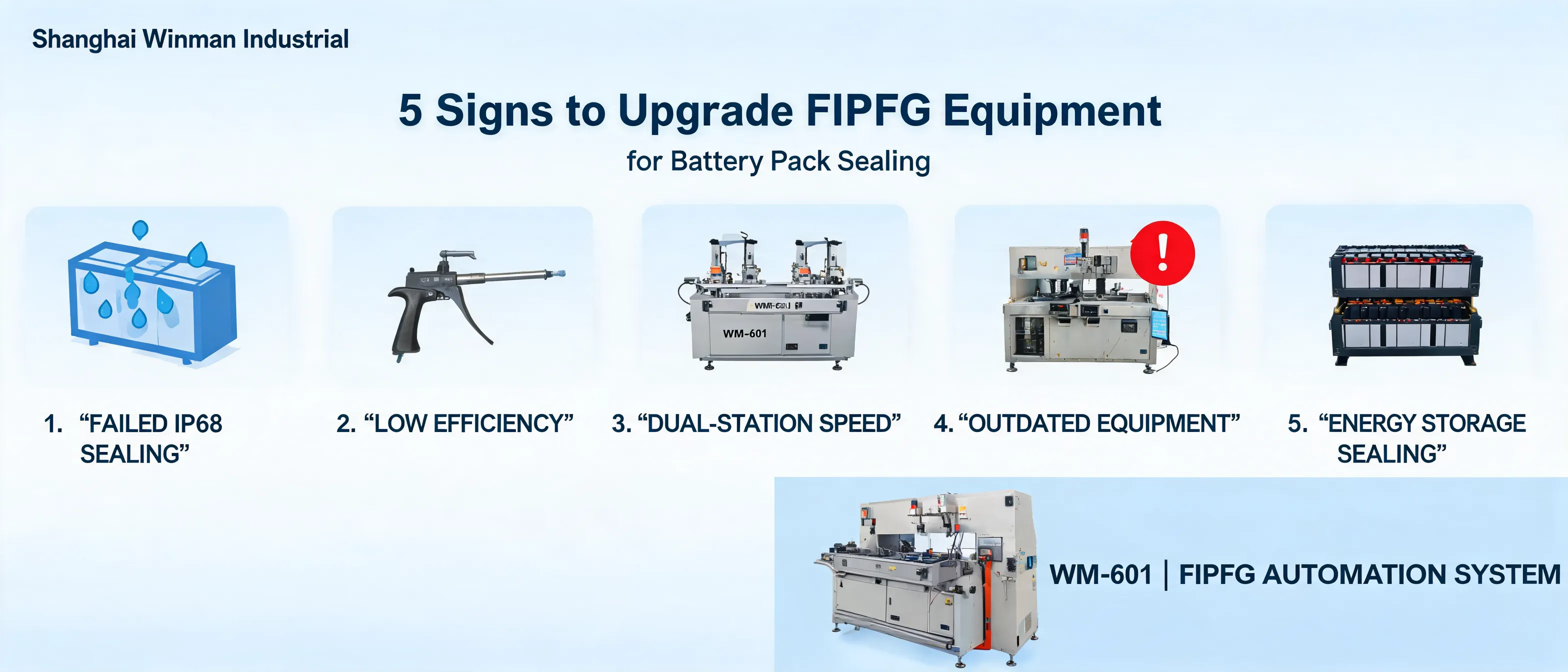
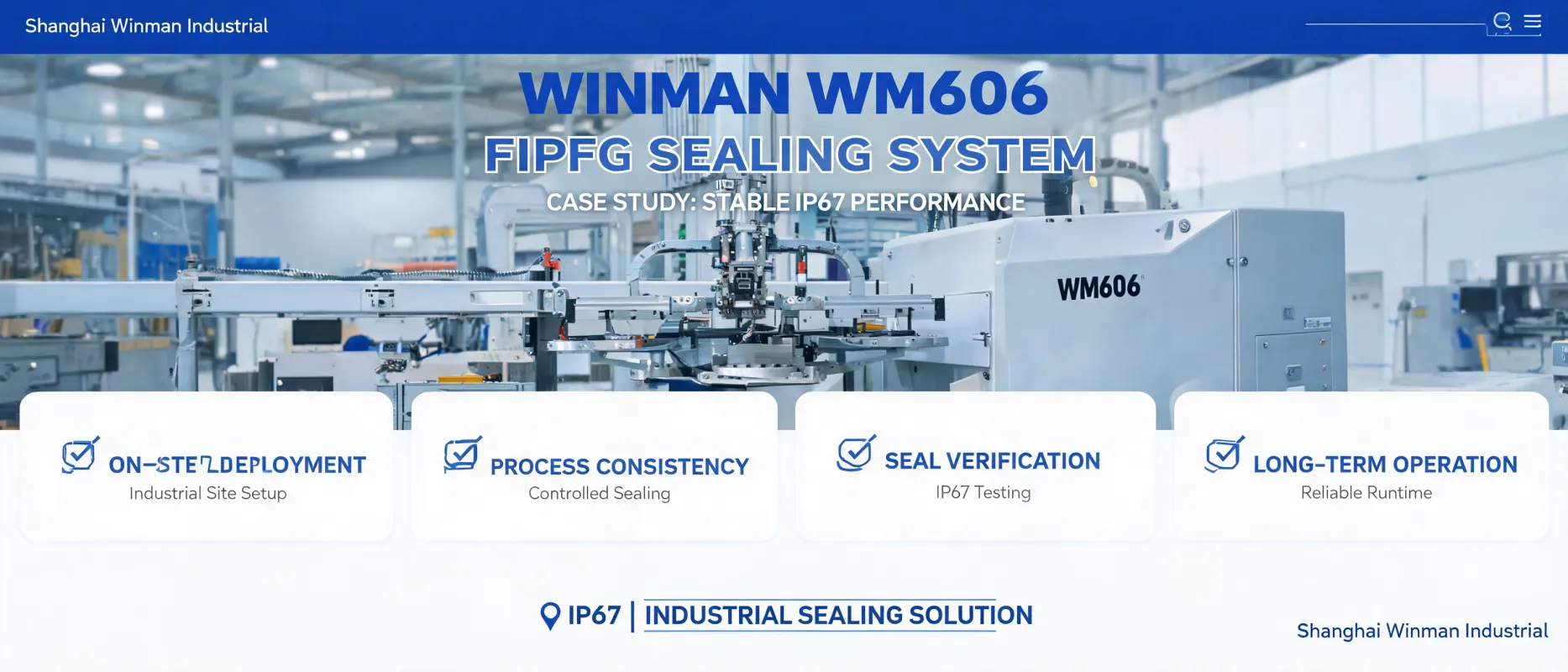
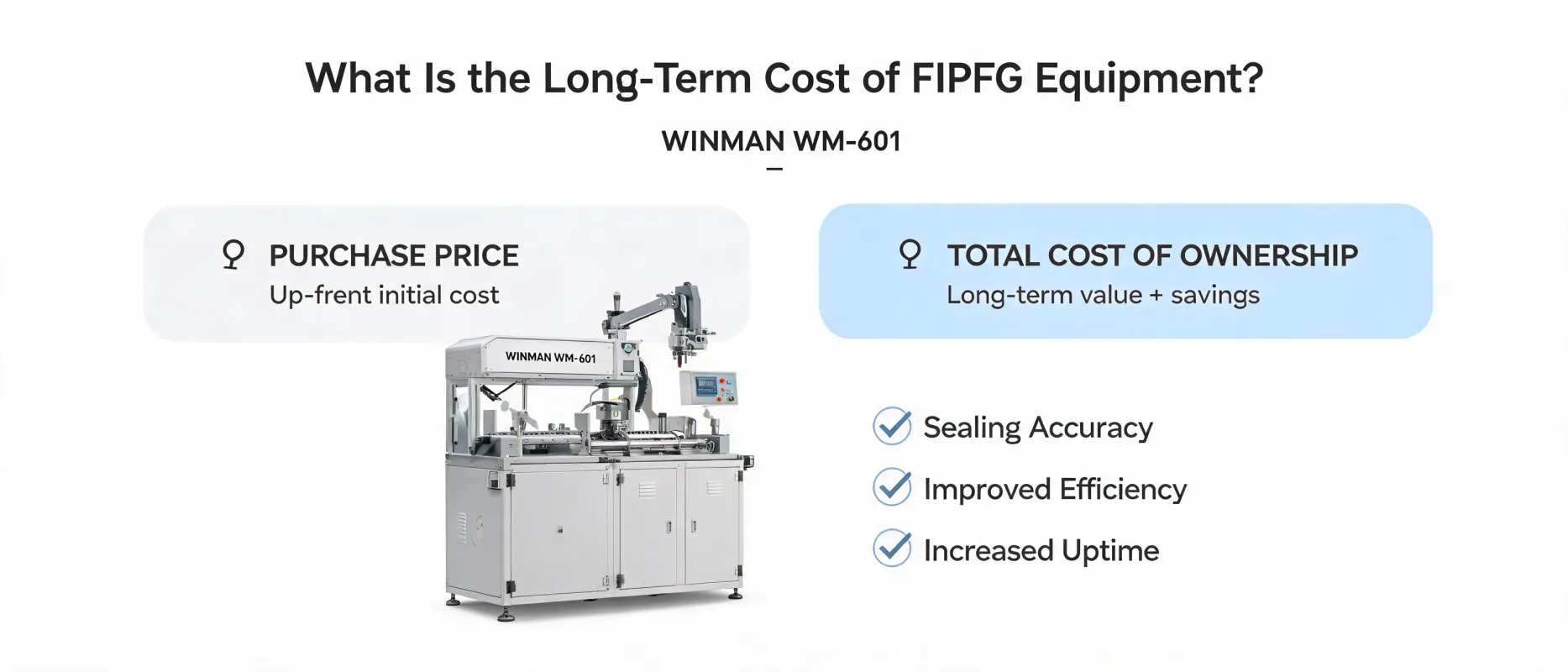
Shanghai Winman Industrial’s WM-601 FIPFG automatic foaming machine is designed for manufacturers evaluating automated sealing for new energy battery packs and energy storage cabinets. It combines programmable dispensing, dual-station operation and optional surface treatment to support more consistent sealing processes in demanding industrial applications.
When Is It Time to Upgrade FIPFG Equipment?
FIPFG equipment selection should be based on actual production requirements rather than on automation alone. For battery pack and energy storage sealing, the need to improve protection, repeatability, labor efficiency and maintenance visibility is often a clear indication that an existing manual or semi-automatic process should be reviewed.
The following five signals can help manufacturers determine whether an automated FIPFG sealing system is appropriate for their next production stage.
Signal 1
Higher IP protection requirements
If a battery pack, energy storage cabinet or electrical enclosure must meet a higher water and dust protection target, the sealing process should be assessed as a complete system. FIPFG performance depends on the selected material, substrate, dispensing path, surface treatment, curing conditions and inspection method.
Signal 2
Inconsistent sealing quality
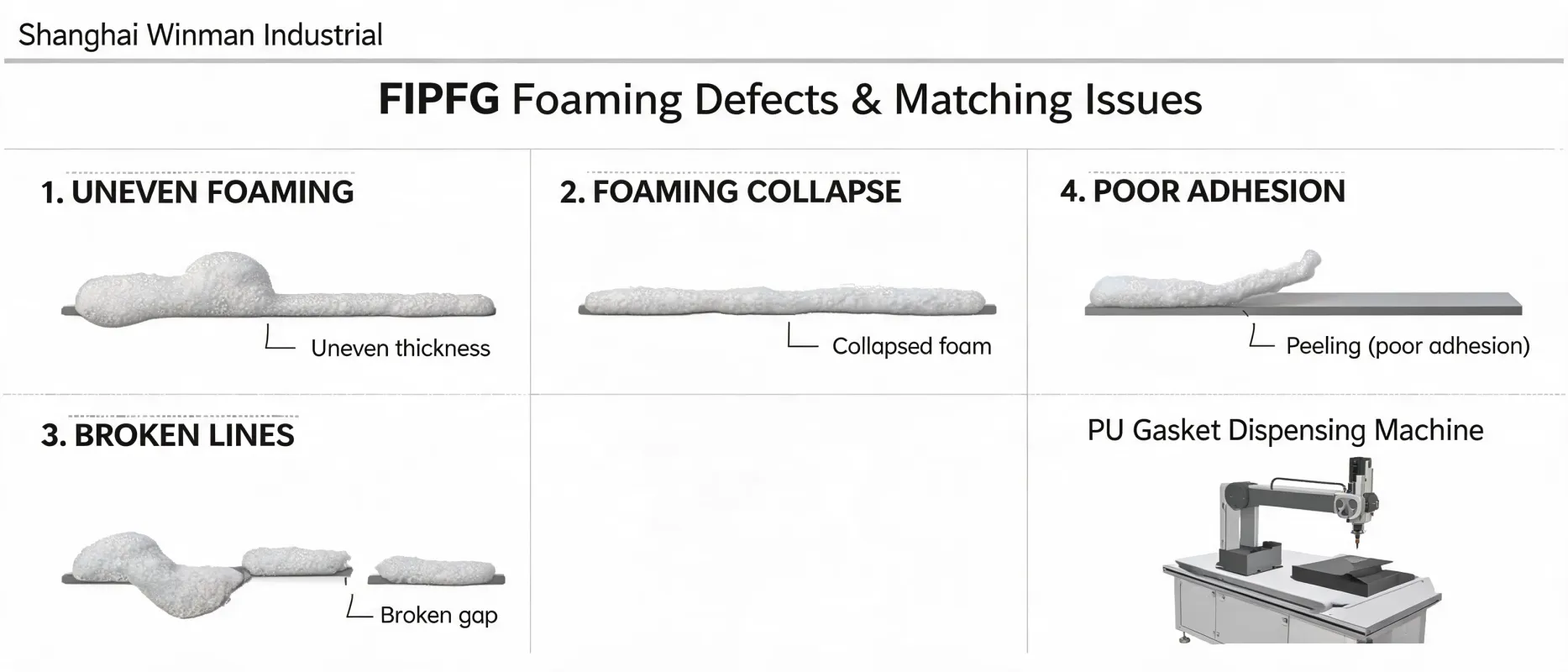
Uneven bead width, variable corners, missed sections or inconsistent compression can make manual sealing difficult to control. WM-601 supports programmable paths and coating accuracy of up to ±0.05 mm, helping manufacturers establish a more repeatable dispensing process.
Signal 3
Rising labor and rework pressure
When operators spend significant time dispensing, correcting bead defects or manually trimming excess material, production costs and process variation can increase. The WM-601’s dual-station configuration is intended to support higher equipment utilization and reduce dependence on manual handling. Actual savings depend on product design, cycle time and line configuration.
Signal 4
Changing production takt or order volume
New battery platforms, larger orders or shorter takt-time targets can expose the limits of a manual sealing method. WM-601 provides an adjustable dispensing speed range of 0–300 mm/s and dual-station operation, allowing the process to be evaluated against changing throughput requirements.
Signal 5
The process needs digital maintenance support
If troubleshooting depends entirely on an on-site specialist, downtime can be harder to manage across multiple production locations. WM-601 supports remote diagnosis and maintenance, helping technical teams review equipment conditions and coordinate service more efficiently.
How WM-601 Addresses These Upgrade Signals
| Production concern |
Relevant WM-601 capability |
| Need for repeatable bead placement |
±0.05 mm coating accuracy and programmable dispensing paths |
| Higher production utilization |
Dual-station automatic operation with adjustable speed from 0–300 mm/s |
| Difficult cleaning and manual trimming |
High-pressure water and air cleaning designed to simplify cleaning and reduce manual finishing work |
| Remote service requirements |
Remote diagnosis and maintenance support |
| Adhesion or surface preparation challenges |
Optional plasma surface treatment, subject to material and substrate evaluation |
IP68 Sealing: Evaluate the Complete Process
A machine specification alone does not determine the final protection level of a sealed assembly. IP68 sealing performance should be validated according to the customer’s product design, sealing material, substrate condition, dispensing geometry, surface treatment, curing process and inspection requirements.
WM-601 can support manufacturers working toward demanding sealing requirements, but the applicable protection level must be confirmed through process trials and product validation. This approach helps align equipment selection with the actual battery pack or energy storage cabinet design.
A Practical Equipment Selection Checklist
- Define the required protection level and the applicable product validation standard.
- Confirm the workpiece dimensions, sealing path geometry and allowable bead variation.
- Review material compatibility, curing behavior and any need for plasma surface treatment.
- Compare the required takt time with the machine’s dispensing speed and station configuration.
- Assess cleaning, changeover, remote maintenance and operator access requirements.
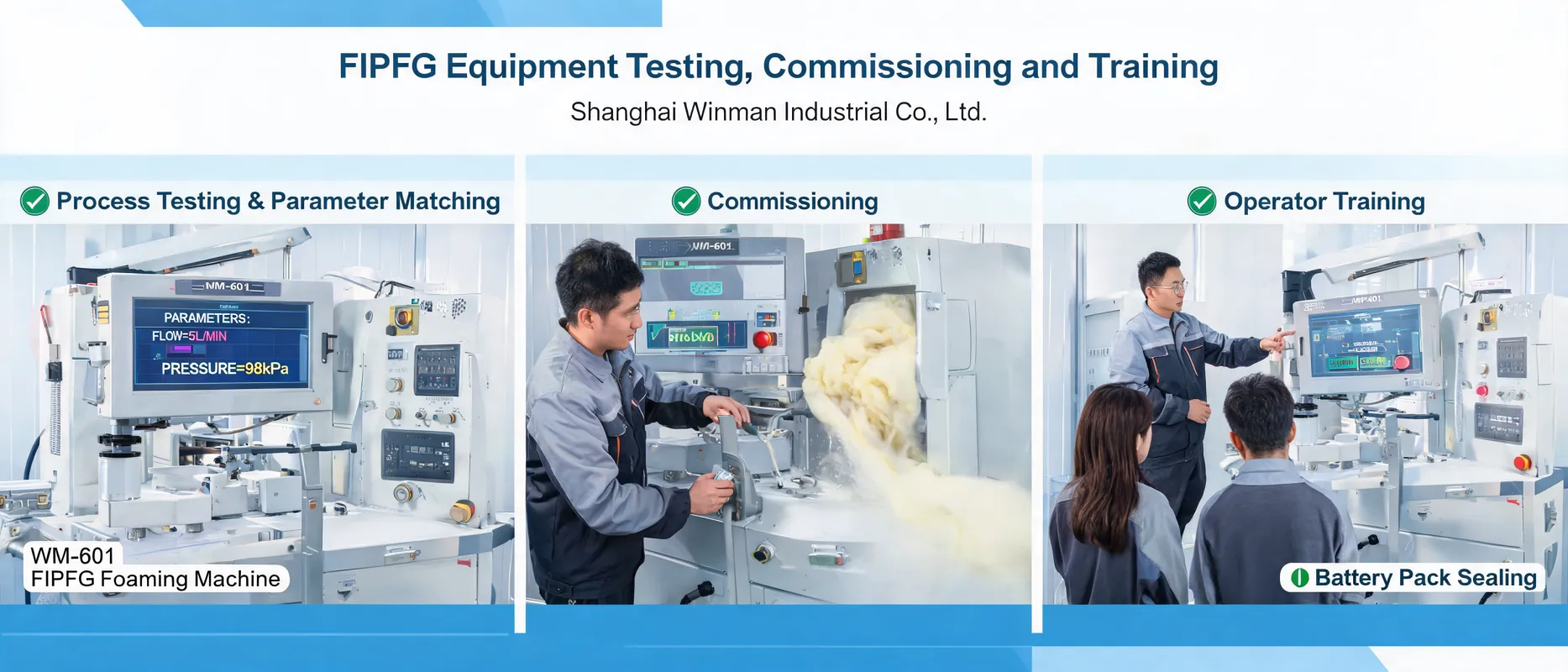
- Run process validation before confirming the final equipment configuration and sealing performance.
Designed for Battery Pack and Energy Storage Applications
The WM-601 FIPFG automatic foaming machine is developed for high-requirement sealing applications including new energy battery packs and energy storage cabinets. Its configuration supports automated polyurethane foaming gasket application, programmable paths and process-oriented equipment management.
The system is manufactured by Shanghai Winman Industrial Co., Ltd., a specialist in FIPFG dispensing and sealing systems serving industrial customers in Europe, the Middle East, Asia and other international markets. The equipment is designed in line with ISO9001 and CE-related requirements, with electrical configuration customization available according to project needs.
If several of these signals are present, a structured FIPFG equipment evaluation can clarify whether automated dispensing, dual-station production and digital maintenance support are suitable for the next stage of your battery pack or energy storage sealing process.