How to Plan a Dual-Station FIPFG Sealing Line: From Cycle Time to Equipment Integration
WINMAN Industrial
How to Plan a Dual-Station FIPFG Sealing Line: From Cycle Time to Equipment Integration
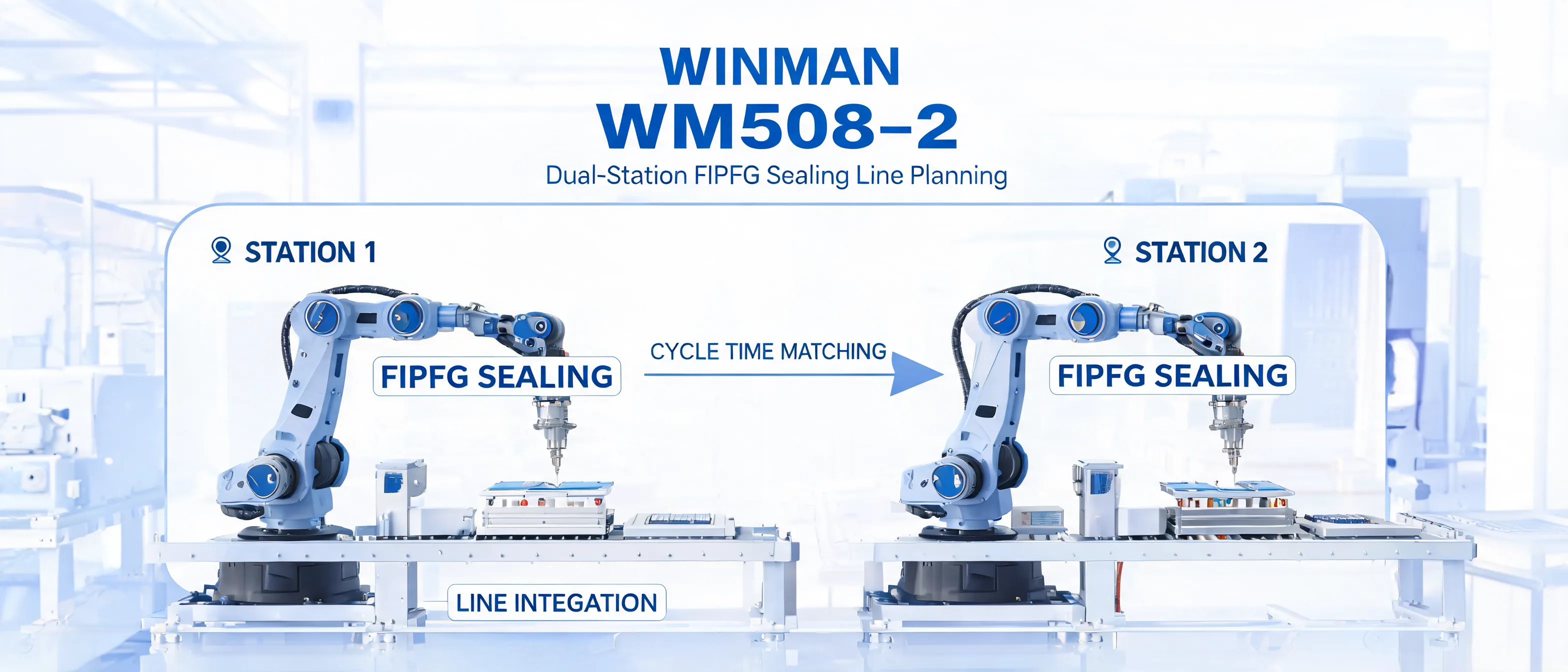
For industrial manufacturers that require stable sealing quality, efficient throughput, and reliable automation, line planning is just as important as the dispensing equipment itself. WINMAN WM508-2 is designed for dual-station FIPFG sealing applications where loading, positioning, dispensing, cleaning, and unloading must work in a coordinated production rhythm.
Why dual-station planning matters
In FIPFG production, the sealing result depends not only on the material and motion control, but also on how well the machine fits into the overall process flow. A dual-station layout helps separate work stages, reduce idle time, and support more consistent operation in industrial automation environments.
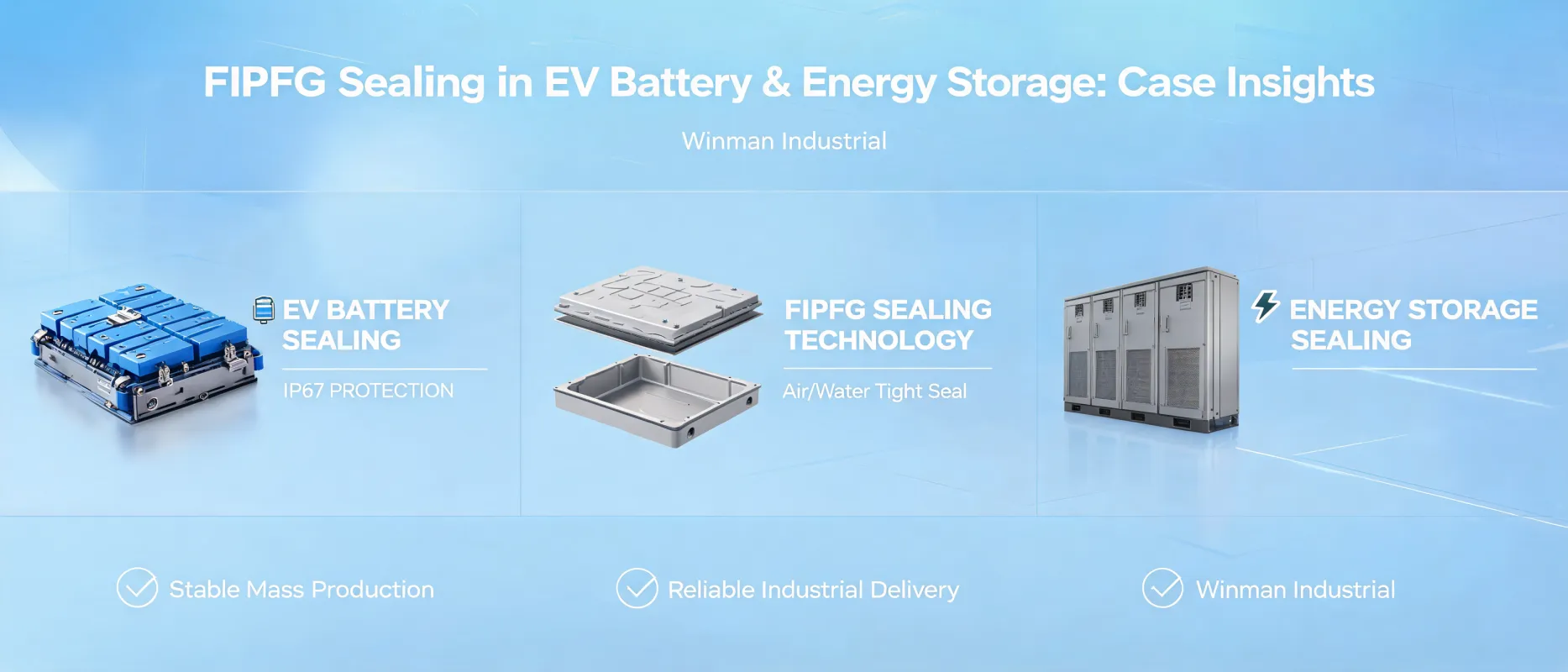
WM508-2 core positioning: a high-precision two-component polyurethane dispensing machine built for industrial sealing tasks such as EV battery boxes, electrical control cabinets, and metal enclosure parts.
It combines dual-station operation with automatic path recognition, dynamic mixing, and cleaning functions to support continuous production planning.
Key factors in cycle time matching
When planning a dual-station FIPFG sealing line, cycle time should be matched across all major steps. The goal is to avoid bottlenecks between loading, dispensing, and unloading while keeping the process stable and repeatable.
How WM508-2 supports dual-station operation
Precision dosing
The machine is built around ±0.01% precision metering, helping maintain sealing consistency across repeated industrial cycles.
Adjustable dispensing speed
With a configurable speed range of 0–300 mm/s, the system can be aligned with different part sizes and station timing requirements.
Path recognition and dynamic mixing
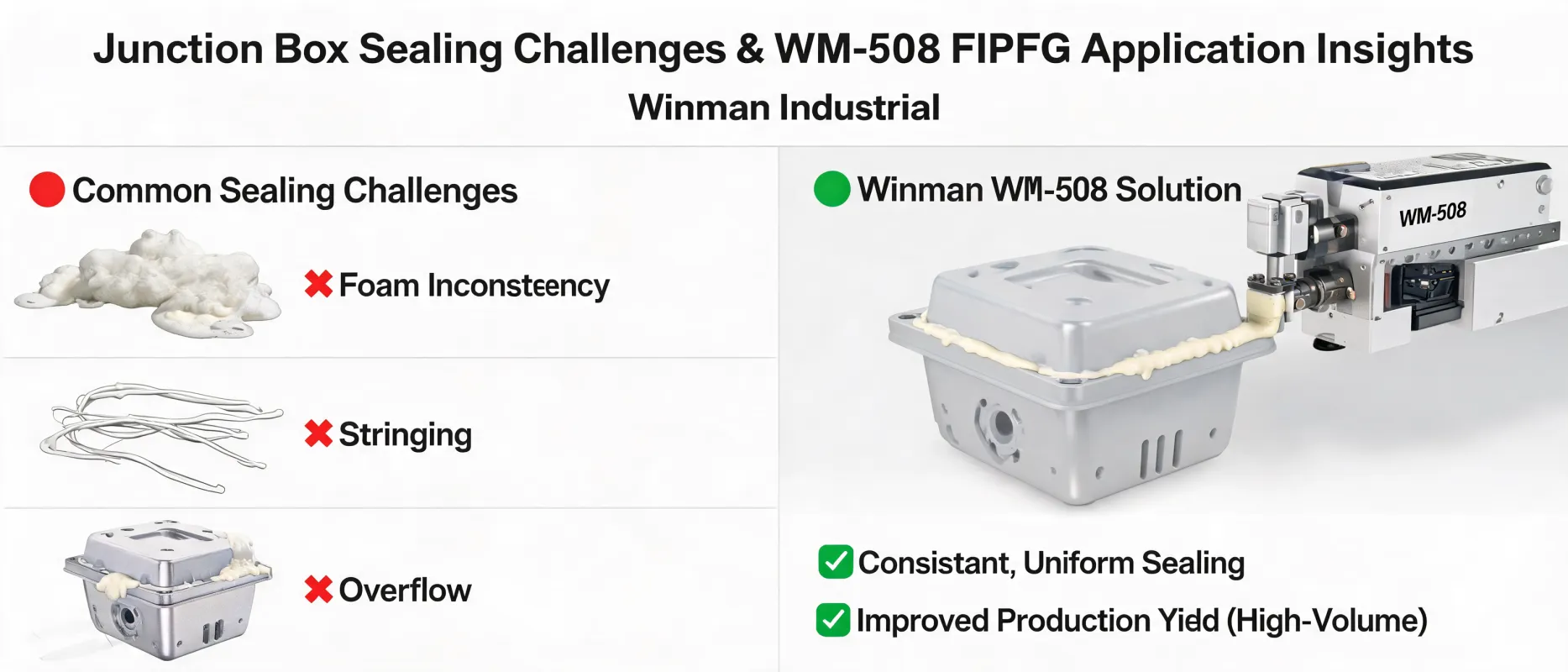
Automatic path recognition and dynamic mixing help stabilize the dispensing process and support reliable sealing quality in automated production.
Cleaning for continuous use
The integrated water + air cleaning system helps reduce downtime and supports cleaner changeovers between production cycles.
Typical integration conditions to consider
A dual-station FIPFG line should be evaluated as a system, not as a single machine. Before integration, manufacturers usually review the following conditions:
- Part geometry and sealing path requirements for each workpiece type.
- Fixture design, positioning accuracy, and station repeatability.
- Loading method, operator access, and automation interface.
- Communication with upstream and downstream equipment.
- Maintenance access, cleaning workflow, and long-run stability.
- Optional expansion requirements such as remote monitoring or plasma treatment.
Where the dual-station format is especially useful
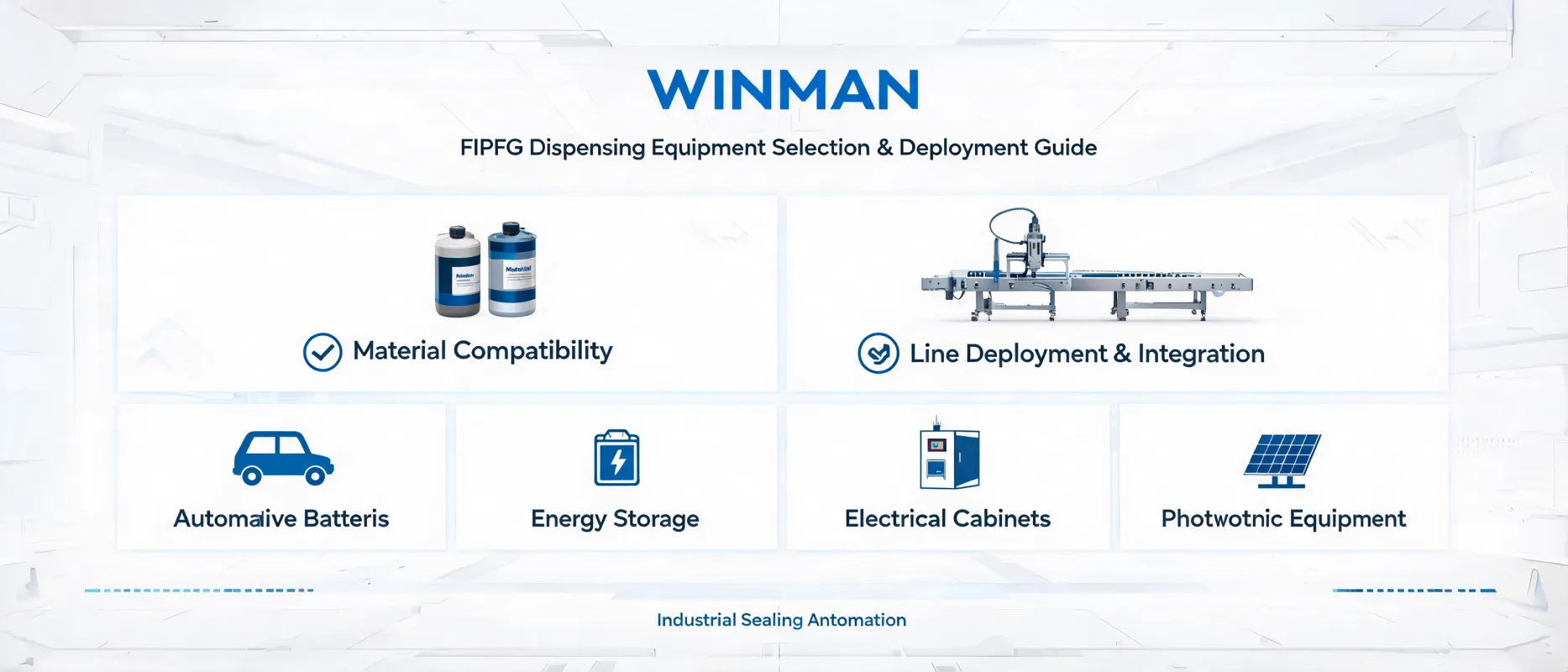
WM508-2 is a practical fit for manufacturing scenarios that require reliable sealing and structured production flow, including:
Technical and compliance context
WINMAN Industrial develops FIPFG sealing equipment with long-term technical experience in polyurethane foam gasket and two-component silicone sealing applications. WM508-2 is produced by Shanghai Winman Industrial Co., Ltd and aligns with the company’s manufacturing standards.
- Designed with German technical core components.
- Built to meet ISO9001 and CE certification requirements.
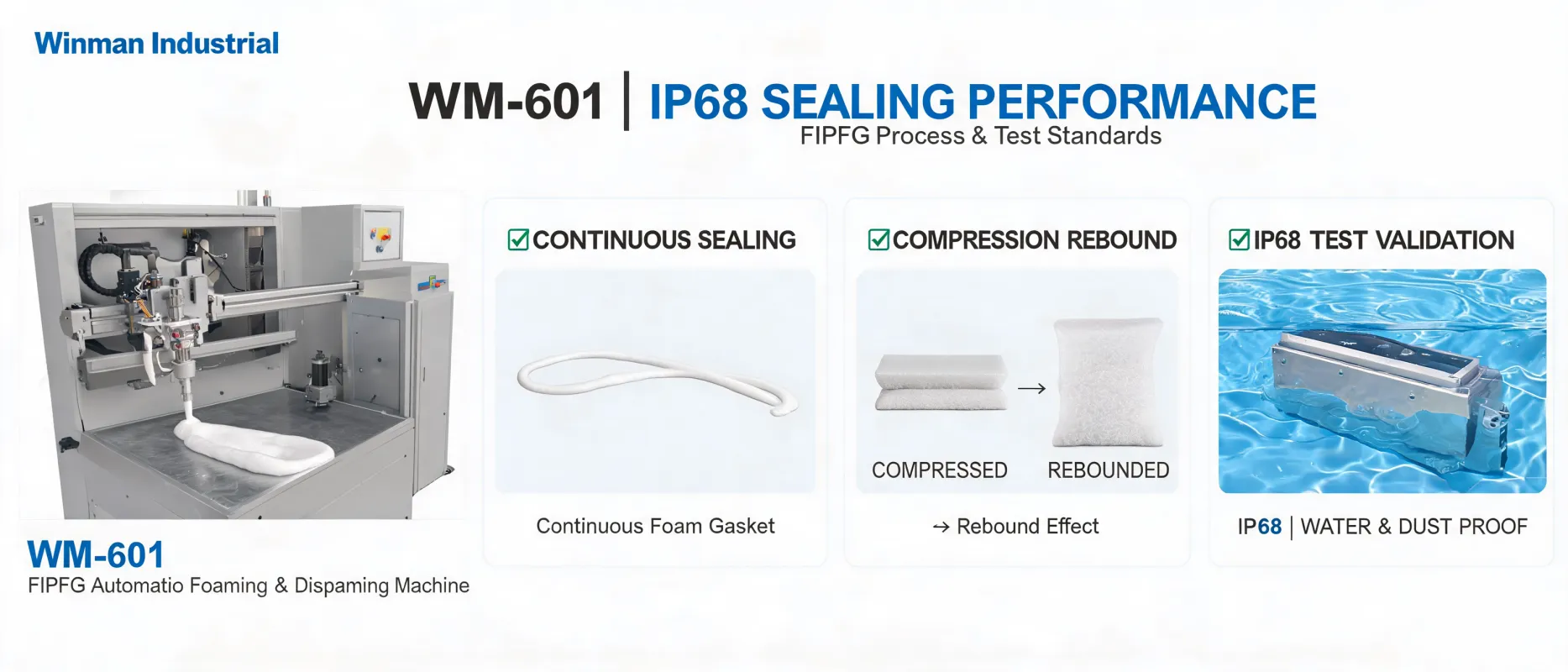
- Supports sealing performance targets up to IP68 in suitable application conditions.
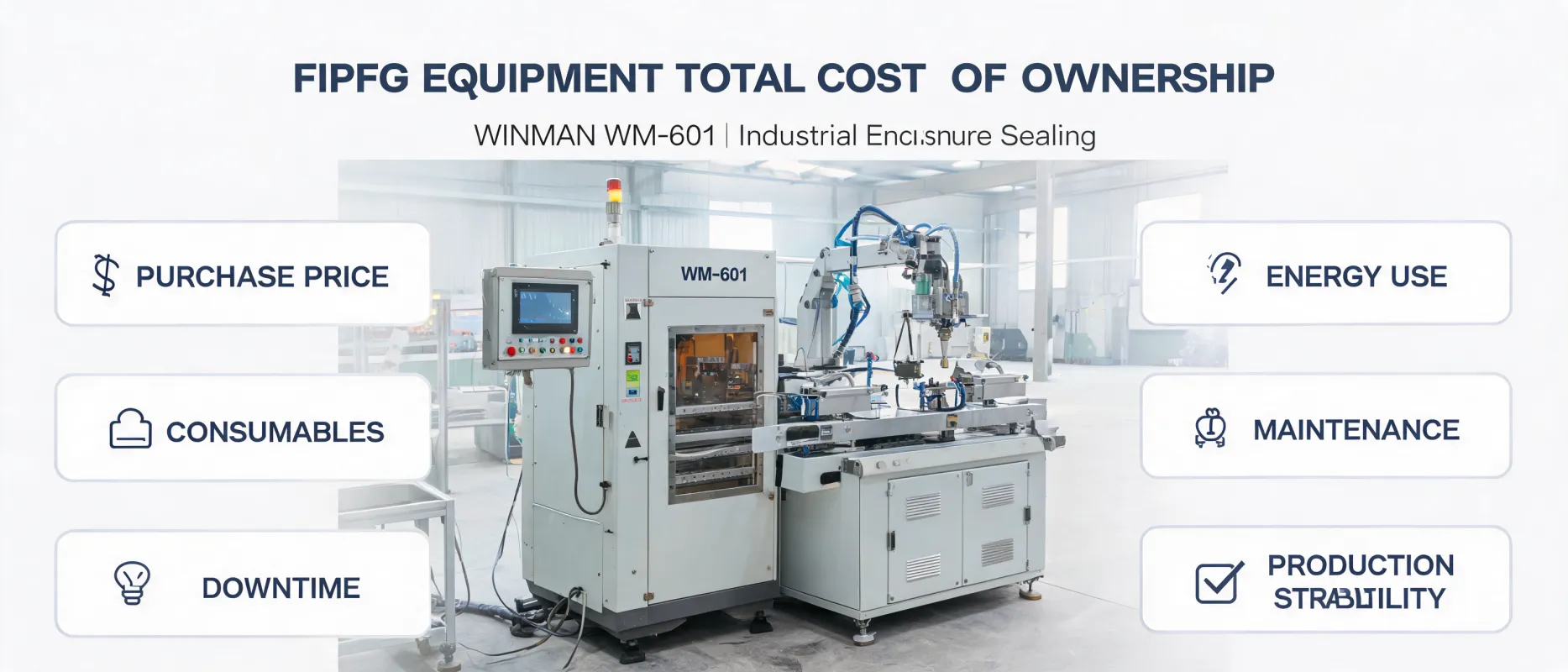
- Rated power consumption is 3.5 kW, supporting energy-conscious long-run production planning.
A practical choice for line builders and industrial users
For manufacturers planning a dual-station FIPFG sealing line, the key is to align process rhythm, equipment capability, and production goals in one integrated layout. WM508-2 provides a structured platform for that planning, helping teams move from cycle time evaluation to equipment integration with a clearer technical basis.
Reliable sealing automation starts with matching the machine to the line, not the other way around.



Hot Products
Popular articles